LALITPUR: A rare stamp may draw attention, an old envelope may spark curiosity, and years of collecting may fill an album. But none of these alone makes a competitive philatelic exhibit. The real challenge lies in turning individual postal artefacts into a coherent, well-researched story.
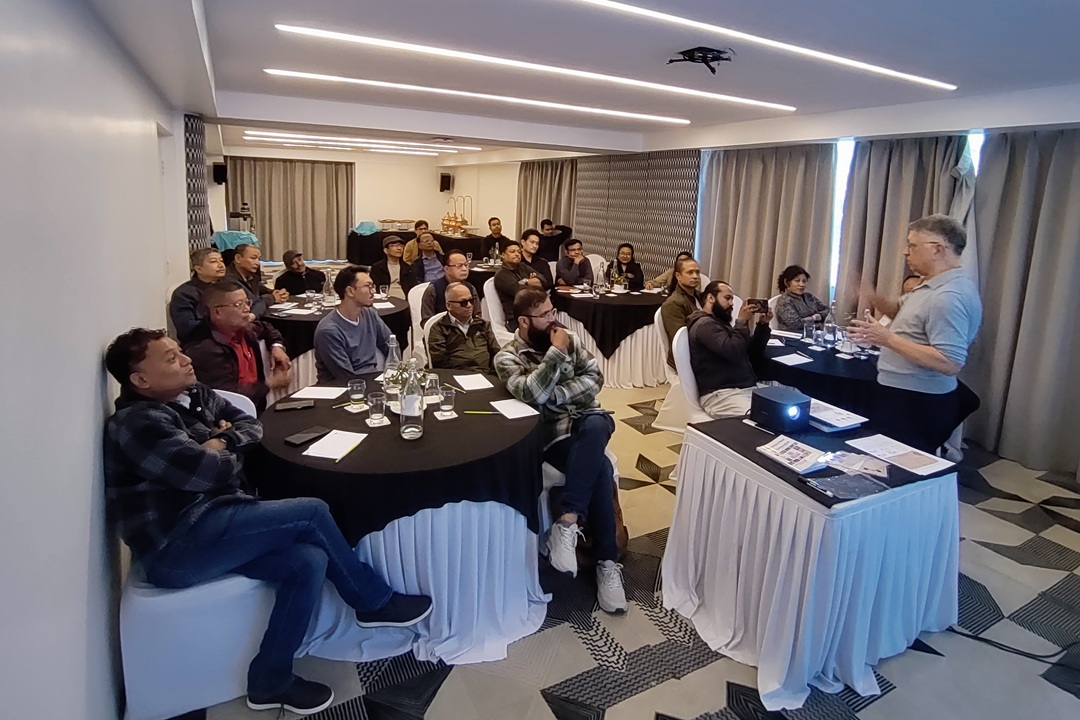
That was the central message at a training programme, “How to Build Postal History Exhibits”, conducted by senior philatelist Binod Krishna Shrestha under the aegis of the Nepal Philatelic Society (NPS) at Square Hotel on Sunday. He guided more than 20 enthusiasts through the essentials of creating competitive exhibits, drawing on his experience at international exhibitions.
Shrestha began a presentation, emphasising that successful exhibiting begins with focus, not accumulation. “A collector must first identify a specific subject, define its boundaries and build a collection around it.”
Every stamp, envelope, cancellation or postal marking should contribute something meaningful, he said. “Research gives the exhibit depth, while thoughtful presentation makes its story understandable to visitors and judges.”
“Material should add substance to the chosen subject, not merely serve to fill space.”
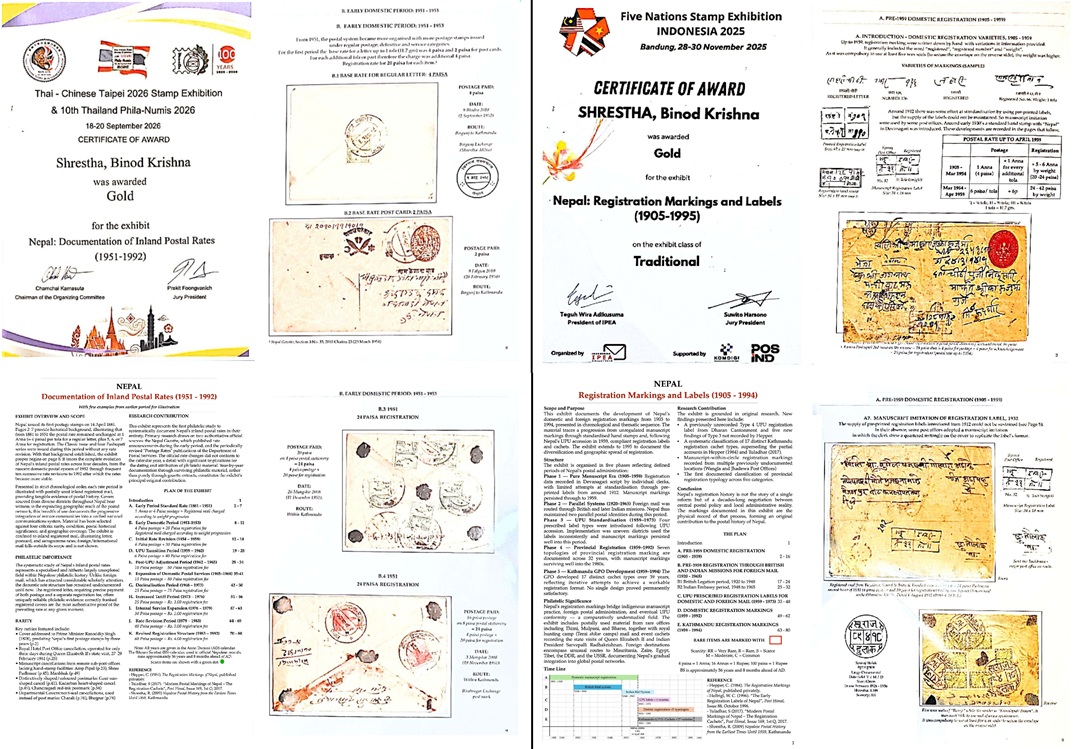
To illustrate these principles, Shrestha presented three of his gold-medal-winning exhibits. Though different in subject, they share a common strength: each transforms carefully selected postal material into a documented historical account.
Also Read: Reading between the folds: Nepal’s collectors rediscover aerogrammes
His first exhibit, “Nepal: Registered Labels and Markings”, won gold at the 2025 Five-Nations Stamp Exhibition in Bandung, Indonesia. Through registration labels, numbers and postal handstamps, it documents how registered mail was processed and handled, offering insights into the country’s postal administration.
The second, “Nepal: Documentation of Inland Postal Rates (1951–1992)”, received gold at the Thailand–Chinese Taipei Two-Nations Stamp Exhibition in Bangkok earlier this year. Using historical envelopes, postcards and cancellations, it traces changes in inland postal charges over four decades, reflecting the evolution of postal regulations and services.
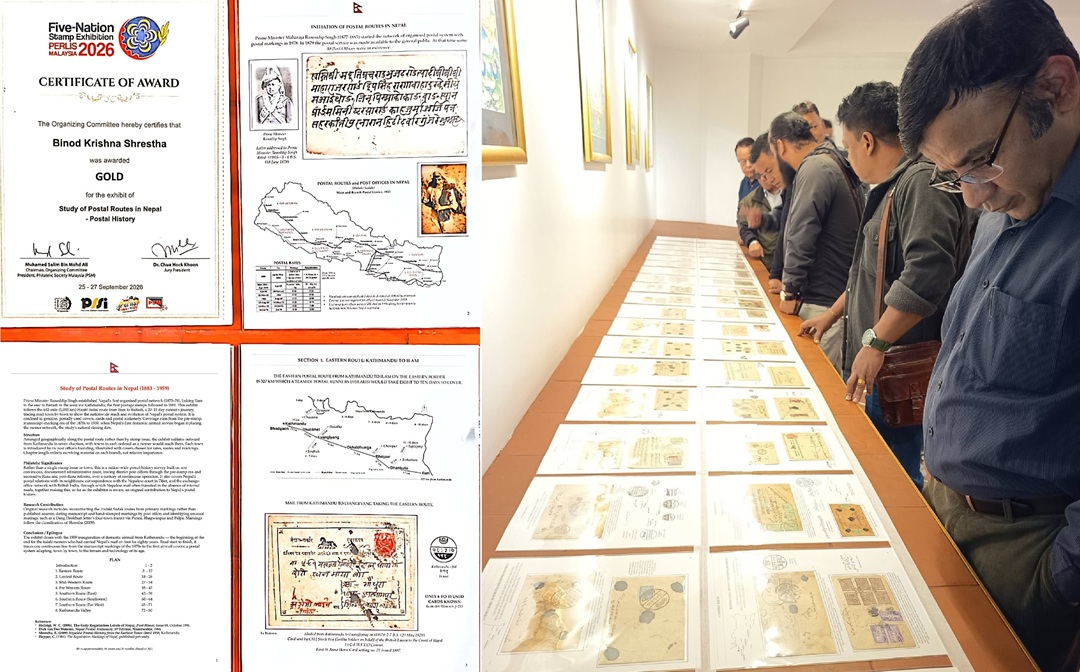
The third, “Nepal: Study of Postal Routes”, earned gold with a Special Prize at the Five-Nations Stamp Exhibition in Perlis, Malaysia, in September 2026. Postal markings, dispatch and arrival dates, and office names help reconstruct the routes through which letters travelled across Nepal, revealing how postal networks connected communities separated by difficult terrain.
According to trainer Shrestha, an exhibit must demonstrate a clear treatment of its subject, sound research, relevant material, accurate descriptions and logical organisation.
He also underscored the importance of proper attributions and references to credible publications, noting that these lend authenticity and credibility to an exhibit.
Collecting provides the material, but research, discipline and storytelling give it value. An impressive album may reflect years of dedication, but an outstanding exhibit makes those years speak.
“In international philately, the prize is not simply for what a collector owns, but for the story they know how to tell,” Shrestha said, explaining what international judges look for. “Collectors must document the historical significance of their material, avoid duplications and ensure that each page connects naturally with the next.”
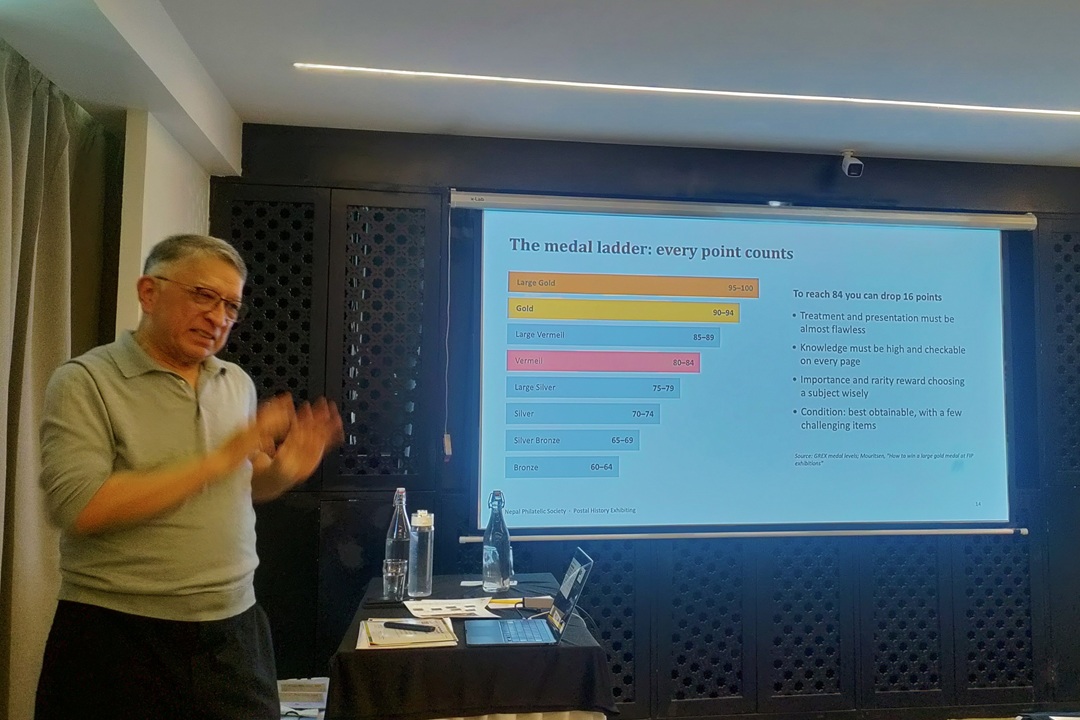
He encouraged participants to treat judges’ scores and comments as learning opportunities rather than final verdicts. Feedback, he added, can reveal weaknesses and help exhibitors improve their work before entering future competitions.
The event wrapped up with the distribution of certificates to participants.
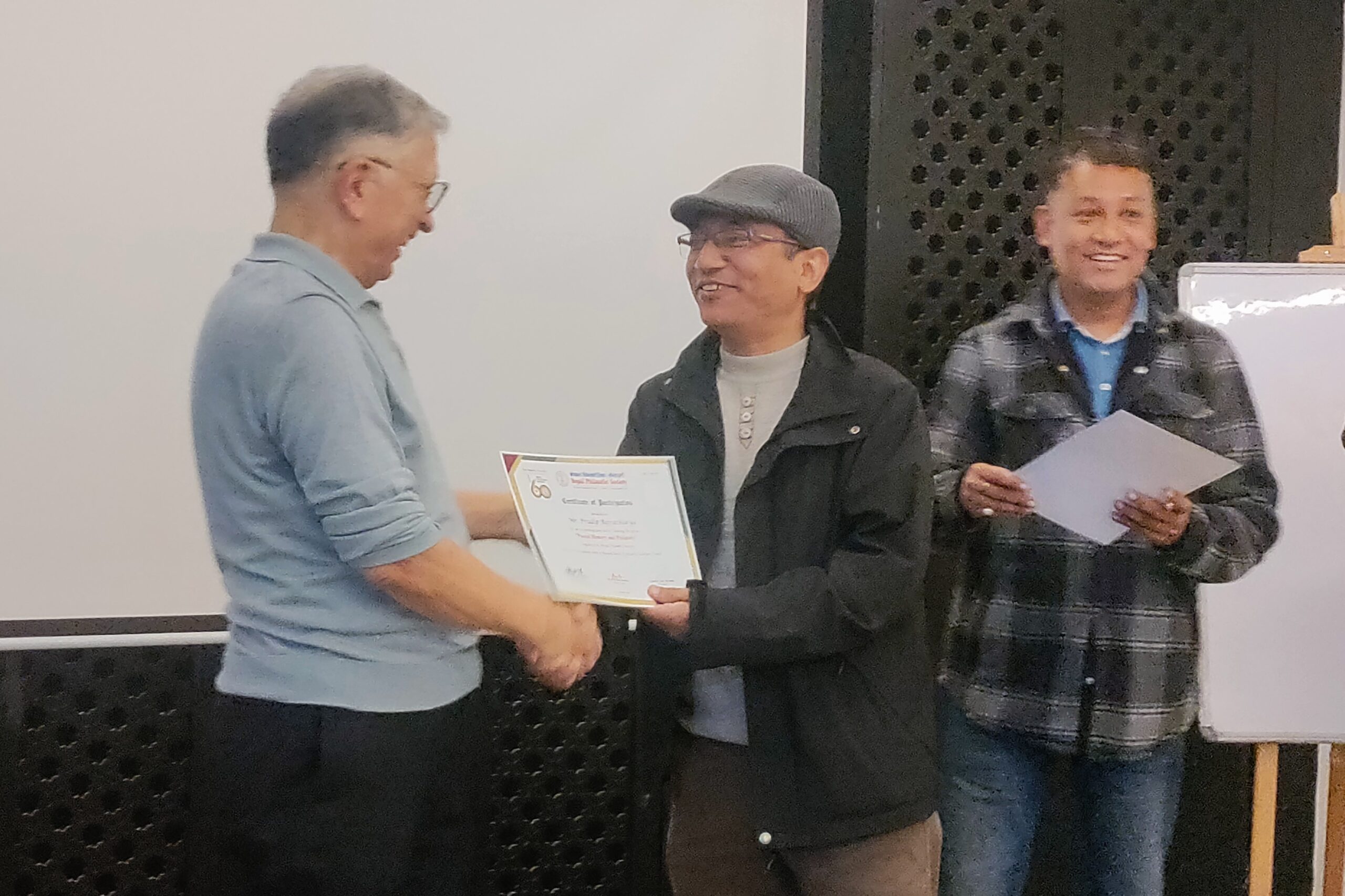
Thanking trainer Binod Krishna Shrestha for sharing his insights, Society President Chandra Rabi Shrestha said the programme represented an effort to make Nepal’s philatelic community more knowledgeable, competitive and internationally oriented.
He said the Society intends to support experienced collectors in preparing for international exhibitions while inspiring newcomers to pursue philately with greater knowledge and purpose. By familiarising participants with international exhibiting standards and practical techniques, the initiative is expected to help cultivate committed collectors and strengthen Nepal’s standing on the global philatelic stage.